
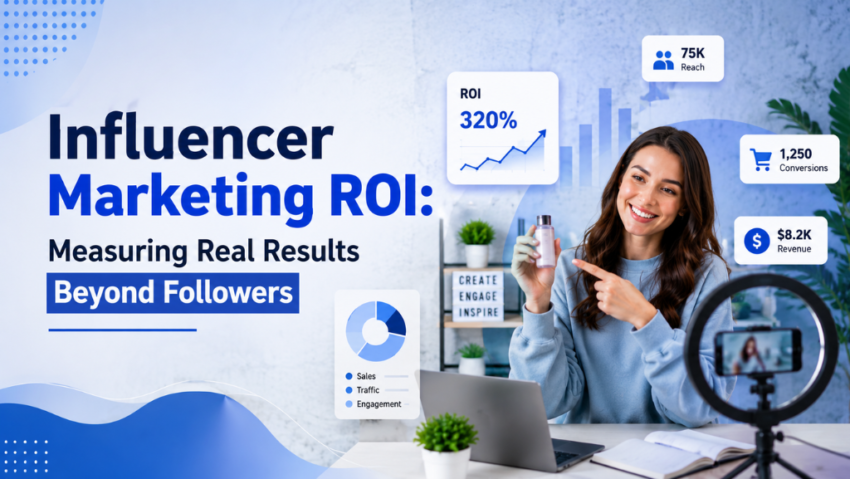
Influencer marketing has become one of the most effective ways for brands to connect with their target audience. However, many businesses still measure the success of influencer campaigns only through followers, likes, and views. While these numbers provide some understanding of reach, they do not always represent the actual impact on business growth.
A successful influencer marketing campaign should focus on measurable results such as brand awareness, website traffic, leads, conversions, and revenue. Understanding influencer marketing ROI helps businesses invest their budget wisely and choose strategies that create real value.
What Is Influencer Marketing ROI?
Influencer Marketing ROI refers to the return a business receives from its investment in influencer collaborations. It helps brands evaluate whether the money, time, and resources spent on influencer campaigns are generating meaningful outcomes.
For example, if a brand spends on an influencer partnership, the goal should not only be to gain visibility but also to achieve specific business objectives such as increasing product sales, generating enquiries, improving brand trust, or attracting new customers.
Why Followers Alone Do Not Define Success
A common mistake business make is selecting influencers based only on their follower count. A person with thousands of followers may not always deliver better results than a micro-influencer with a smaller but highly engaged audience.
Engagement quality, audience relevance, content authenticity, and trust play a major role in influencer marketing success. An influencer whose followers match the brand’s target customers can often generate better results than someone with a large but unrelated audience.
For example, a local business targeting customers in a specific city may benefit more from a regional influencer who has strong connections with that community rather than a national influencer with millions of followers.
Important Metrics to Measure Influencer Marketing ROI
To understand the real performance of an influencer campaign, businesses should track multiple metrics beyond follower growth.
Engagement Rate
Likes, comments, shares, and saves indicate how actively people interact with influencer content. Higher engagement usually shows stronger audience interest and trust.
Website Traffic
Tracking website visits from influencer campaigns helps businesses understand how many people are interested enough to explore their products or services.
Leads and Conversions
The main objective of many influencer campaigns is generating customers. Tracking enquiries, sign-ups, purchases, or bookings provides a clear picture of campaign effectiveness.
Brand Awareness
Influencer marketing can improve brand recognition among potential customers. Surveys, search volume growth, and social media mentions can help measure increased awareness.
Customer Acquisition Cost
Comparing the amount spent on influencer marketing with the number of customers gained helps businesses understand whether the campaign is financially beneficial.
How Brands Can Improve Influencer Marketing Results
A successful influencer campaign requires proper planning and strategy. Businesses should first define their goals, whether it is increasing sales, improving awareness, or promoting a new product.
Choosing the right influencer is equally important. Brands should analyze the influencer’s audience demographics, engagement levels, previous collaborations, and content style before making a decision.
Creating authentic partnerships also improves results. Influencers should have creative freedom to present products naturally because audiences respond better to genuine recommendations rather than direct advertisements.
Using tracking methods such as unique discount codes, campaign-specific links, and analytics tools can help businesses measure performance accurately.
The Role of Data in Influencer Marketing
Data-driven decisions make influencer marketing more effective. Instead of focusing only on popularity, brands can use performance insights to identify which influencers, content formats, and platforms generate the best outcomes.
Regularly analyzing campaign data allows businesses to improve future strategies, reduce unnecessary spending, and achieve better returns.
Influencer marketing is no longer just about gaining attention; it is about creating meaningful connections that contribute to business growth. Brands that focus on measurable results can turn influencer partnerships into powerful marketing investments.
Conclusion
Influencer marketing success goes beyond followers and likes. The real value comes from understanding audience engagement, tracking conversions, measuring brand impact, and achieving business goals. A well-planned influencer strategy can help businesses build trust, reach the right customers, and improve their overall marketing performance.
For businesses looking to create result-driven influencer campaigns, partnering with an experienced Influencer Marketing Agency in Hubli can provide the right strategy and execution. Eneblur Consulting, a trusted Digital Marketing Agency in Hubli, helps brands leverage influencer marketing and other digital solutions to achieve measurable growth.