
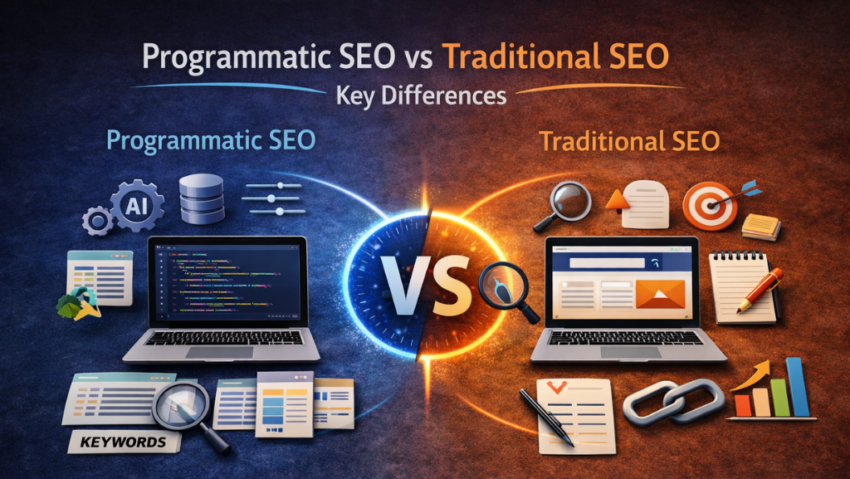
Search engine optimization plays a crucial role in helping businesses improve their visibility on search engines like Google. As competition online continues to grow, companies are exploring different SEO strategies to attract more organic traffic. Two commonly discussed approaches are traditional SEO and programmatic SEO. While both aim to improve search rankings, they follow different methods and serve different purposes. Understanding the key differences between these two strategies can help businesses decide which approach is most suitable for their goals.
What is Traditional SEO
Traditional SEO is the standard method of optimizing a website for search engines by manually creating and optimizing content. In this approach, each page on the website is carefully planned, written, and optimized with targeted keywords.
SEO professionals typically start with keyword research to identify relevant search terms that potential customers are using. Based on this research, they create informative blog posts, service pages, and landing pages. These pages are optimized with proper headings, meta descriptions, internal links, and structured content to improve their visibility in search results.
Traditional SEO focuses strongly on quality and user experience. The content is usually detailed, informative, and designed to answer user queries effectively. Because each page is manually written and optimized, it often provides deeper insights and builds credibility for the website.
However, the process can take time because every page requires research, writing, editing, and optimization.
What is Programmatic SEO
Programmatic SEO is a scalable approach that uses automation and structured data to create a large number of SEO-friendly pages. Instead of writing each page manually, programmatic SEO relies on templates and databases to generate pages that target multiple keyword variations.
This strategy is commonly used by large websites that want to target thousands of search queries. For example, a directory website might create pages for different cities, services, or categories using a single template structure.
By combining structured data with automated page generation, websites can publish hundreds or even thousands of pages quickly. These pages target long-tail keywords and specific search queries that may not be practical to cover through manual content creation.
Although programmatic SEO allows websites to scale quickly, it requires proper planning, high-quality data, and well-designed templates to ensure the content remains useful and valuable to users.
How Programmatic SEO Differs from Traditional SEO
Content Creation
The biggest difference between the two approaches is how content is created. In traditional SEO, every page is written and optimized manually by SEO experts or content writers. In programmatic SEO, pages are generated automatically using templates and structured data.
Scalability
Traditional SEO grows slowly because each page must be created individually. Programmatic SEO allows websites to scale rapidly by generating multiple pages that follow a similar structure.
Keyword Targeting
Traditional SEO usually focuses on high-value keywords and detailed topics. Programmatic SEO targets large volumes of long-tail keywords and keyword variations.
Content Depth
Traditional SEO requires strong content writing, keyword research, and manual optimization. Programmatic SEO relies more on data, automation tools, and template systems.
When Businesses Should Use Traditional SEO
Traditional SEO is best suited for businesses that want to build authority and provide in-depth information to their audience. Blogs, educational articles, service pages, and company websites benefit greatly from this strategy.
Since traditional SEO focuses on high-quality content, it helps establish trust and credibility. It also works well for competitive keywords where strong content and expertise are required to rank.
When Businesses Should Use Programmatic SEO
Programmatic SEO works well for websites that need to target many similar search queries. Businesses that offer services in multiple locations or operate directory-style platforms can benefit from this approach.
For example, a company offering services across several cities may create pages for each location using programmatic templates. This helps the website appear in local search results for different areas without manually writing each page.
However, businesses must ensure that the generated pages provide useful information. Poorly structured programmatic pages with repetitive or low-value content may not perform well in search rankings.
Conclusion
Traditional SEO and programmatic SEO both play an important role in building a strong online presence. Traditional SEO focuses on creating valuable, well-researched content that helps businesses build credibility, authority, and long-term trust with their audience. Programmatic SEO, on the other hand, helps websites scale quickly by targeting a large number of search queries and long-tail keywords through structured and automated page creation.
When used together, these two approaches can create a powerful SEO strategy. Traditional SEO strengthens core pages such as blogs, service pages, and important landing pages, while programmatic SEO expands the website’s reach by capturing additional search traffic from multiple keyword variations and locations. This combination allows businesses to grow both depth and scale in their search visibility.
For businesses that want consistent organic traffic and long-term digital growth, implementing the right SEO strategy is essential. Choosing the right experts for SEO services in Hubli can help you build a strategy that balances high-quality content with scalable search opportunities. If you want to explore advanced strategies and implement effective Programmatic SEO in Hubliaa, you can learn more by visiting https://www.eneblur.com/.