
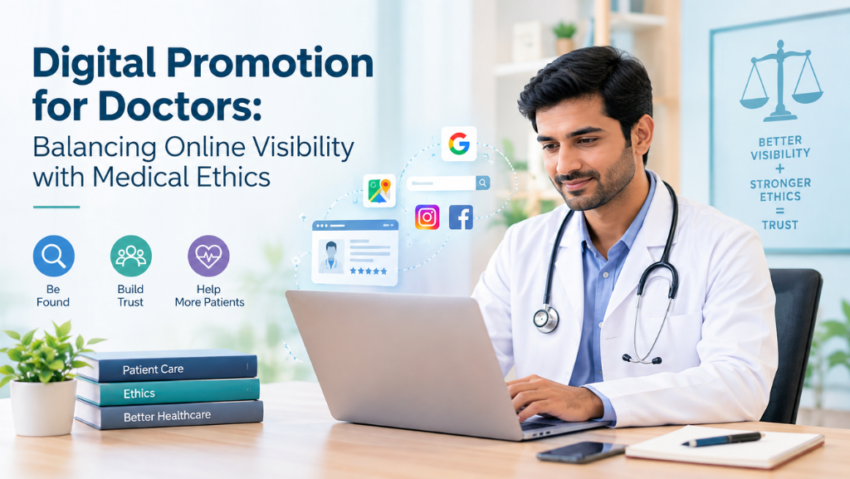
Digital marketing has changed how patients discover doctors, clinics and hospitals. Websites, Instagram, YouTube and Google Business Profiles help people find healthcare information and medical services. However, promoting healthcare requires greater responsibility than marketing ordinary products.
The National Medical Commission (NMC) issued its Guidelines on Ethical Advertising and Public Communication on 6 October 2026. These guidelines establish important standards for Registered Medical Practitioners (RMPs), hospitals and medical institutions when communicating with the public.
NMC Guidelines 2026: A New Direction for Ethical Healthcare Marketing
The NMC Guidelines 2026 highlight the importance of maintaining transparency, professionalism and patient trust in the digital healthcare space. As doctors, clinics and hospitals increasingly use online platforms to connect with patients, their communication must remain accurate, responsible and aligned with medical ethics. The guidelines emphasise that healthcare professionals should avoid misleading advertisements, exaggerated treatment claims, paid endorsements, fabricated reviews and the unauthorised use of patient information. They also encourage doctors to focus on sharing credible health education, verified professional credentials and essential practice-related information rather than using aggressive promotional techniques. By following these standards, medical professionals can strengthen their digital presence while ensuring that patient welfare and the reputation of the medical profession remain their top priorities.
Understanding NMC Guidelines 2026
The guidelines aim to protect patient interests, maintain the dignity of the medical profession, prevent misleading medical claims and reduce the commercialisation of healthcare.
They cover websites, blogs, social media, WhatsApp, Telegram, podcasts, sponsored posts, influencer collaborations and AI-assisted promotional content. Doctors remain responsible for content authorised or permitted by them, even when an external marketing agency or influencer publishes it.
Important Medical Advertising Rules Doctors Should Know
1. Avoid Misleading Claims
Doctors and hospitals must avoid exaggerated statements such as “100% success”, “Guaranteed Cure”, “Best Doctor” or “No. 1 Specialist” unless claims are objectively verifiable under the guidelines. Unsubstantiated treatment promises and misleading success rates should not be used.
2. Patient Testimonials and Endorsements
Patient testimonials, recommendations and endorsements cannot be used for professional promotion on social media. Doctors should also avoid using celebrities or influencers to promote medical services through prohibited endorsements.
3. Before-and-After Photographs
Patient photographs and treatment results should not be used for promotional purposes. Clinical cases may be shared for genuine scientific or educational purposes subject to applicable consent, anonymisation and professional requirements.
4. Discounts and Promotional Offers
Discounts, coupons, gifts, referral rewards, cashbacks and free procedures must not be used to attract patients through solicitation or encourage unnecessary treatment. Consultation fees can be communicated factually and transparently.
5. Fake Reviews and Engagement
Purchasing followers, likes, comments, ratings or fake patient reviews is prohibited. Doctors and hospitals should maintain genuine and transparent online reputations.
6. AI-Generated Promotional Content
AI must not be used to create fake patient experiences, altered treatment results, misleading medical claims or fabricated endorsements. The guidelines also restrict AI-generated commercial promotional campaigns and require appropriate disclosure for permitted AI-generated or materially altered content.
7. Patient Privacy
Patient names, photographs, medical records and identifiable treatment details must be protected. Consent, where legally required, should be informed, voluntary, documented and verifiable. Patient confidentiality must remain a priority in every digital activity.
What Doctors Can Share Online
The guidelines do not prohibit all digital communication. Doctors can share general health awareness information, preventive healthcare tips, educational videos, research-based information and public health messages, provided these do not become promotional or solicit patients.
Doctors can also communicate factual information about their qualifications, practice announcements, consultation charges and changes in clinic addresses within the permitted scope.
Hospitals can share objective information about their departments, facilities, equipment, emergency services, accreditation and applicable charges without superiority claims or guaranteed outcomes.
Electronic media posts by doctors should display their name, qualifications, registration status and SMR/NMR registration number as required. Hospitals should provide the corresponding details of their doctors.
Building an Ethical Medical Website and Social Media Presence
A professional healthcare website should provide accurate doctor profiles, recognised qualifications, specialisations, clinic locations, contact information and consultation details.
Search Engine Optimisation (SEO) and Google Business Profile can help patients discover factual healthcare information. Social media can support educational communication, but paid patient acquisition, prohibited endorsements, misleading advertisements and manipulative rankings must be avoided.
Doctors should also review their existing websites, advertisements, patient images, reviews and marketing agency agreements regularly.
Penalties for Violating NMC Guidelines
Violations may result in disciplinary action by the concerned State Medical Council. Depending on the seriousness and frequency of the violation, consequences may include warnings, ethics training, monetary penalties, suspension of registration or removal from the medical register. Doctors are entitled to procedural safeguards, including an opportunity to respond and an appeal mechanism to the Ethics and Medical Registration Board (EMRB), NMC, generally within 60 days.
Conclusion
Building a strong online presence is becoming increasingly important for doctors, clinics and hospitals. However, successful healthcare promotion is not just about gaining visibility; it is about sharing reliable information, educating patients and building trust while following medical ethics. By adopting responsible digital practices and complying with NMC Guidelines 2026, healthcare professionals can create a meaningful connection with patients.
With the right digital strategy, doctors can make their services more accessible and help patients find authentic healthcare information online. Eneblur Consulting supports healthcare professionals with Healthcare Digital Marketing in Hubli, helping clinics and hospitals improve their online visibility through SEO, content marketing and social media management. We also provide professional Medical Website Development in Hubli, creating informative and user-friendly websites that help patients connect with healthcare providers.
Explore our healthcare digital marketing solutions at eneblur.com.